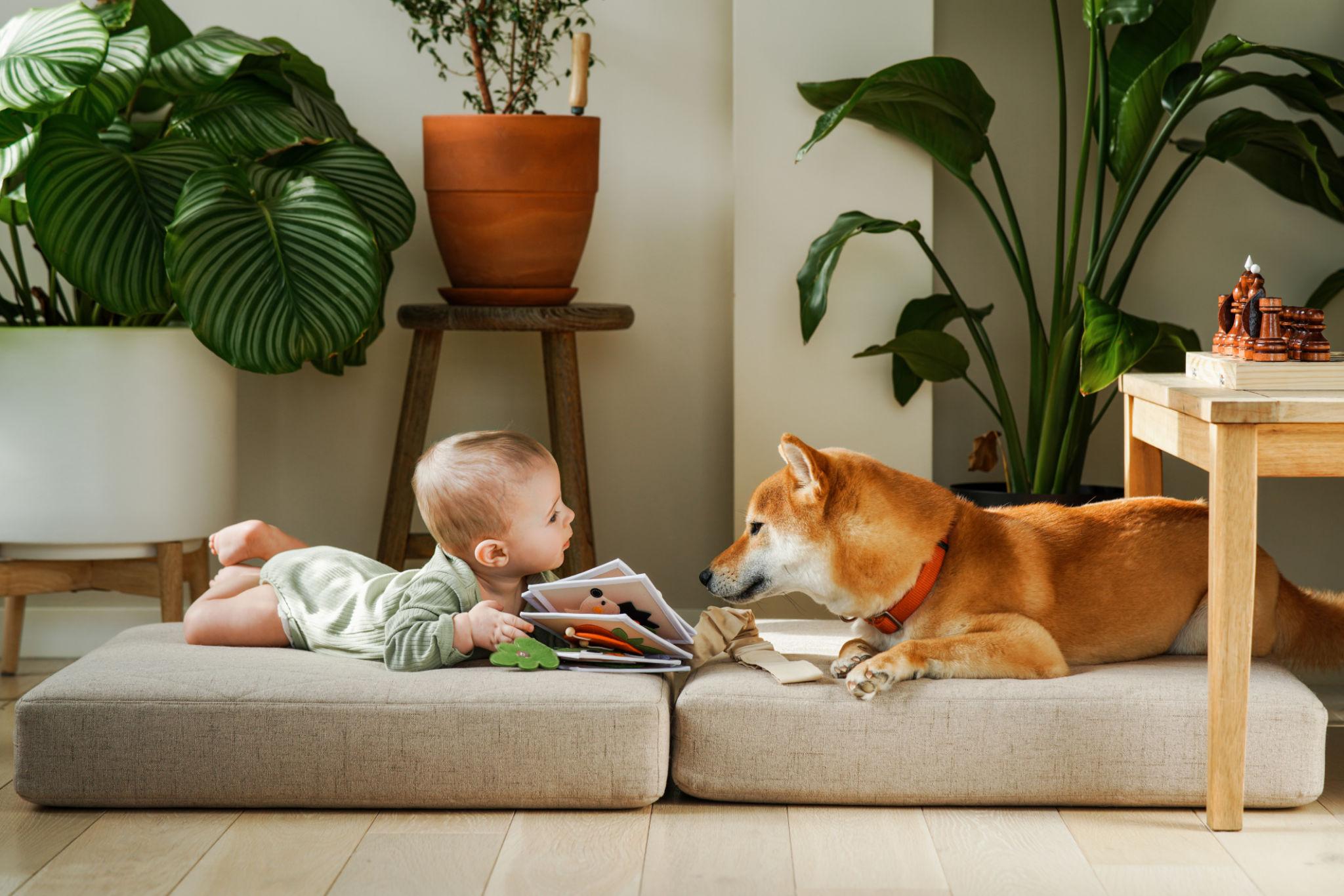
The day you take your baby home is a memorable one. Cuddly blankets, leathery fingers, silent reverence, and not to be left out, the inquisitive nose at the door. To your dog, the world surrounding them gets on routine, scent, tone, and energy. All of a sudden, everything starts changing.
The entire house begins to smell different, there are changes in schedules, and you appear to have divided attention. The dog does not know this is a new member of the family; it is a new space. Preparation does not mean to remain conscious that something will go wrong. It is concerning leading your dog through transitions, excessive self-confidence, and the quality of clarity.
This is particularly crucial with a small dog breed, such as a Mini Bernedoodle puppy. This caring and active breed needs routine, clarity of expectation, and companionship. When the change is gradual and positive, your pet will not experience competition and confusion with your baby. They find them as a part of their pack.
Why Preparation is More Important than You Think
Pups learn of regular, definite boundaries and predictability. A baby can disrupt the three. Strange sounds, new smells, and changed walking schedules and divided attention build anxiety if things are introduced suddenly.
Being organized about your everyday routine and having time to play fun games with your puppy helps you build the emotional balance throughout the process of this change.
It can be assisted by proper preparation:
- Avoiding stress-related behaviours such as withdrawal or over-barking.
- Less attention seeking or jealousy.
- Keep your dog emotionally stable.
- Being in favor of a friendly, secure environment with the baby and the pet.
It can be gradual and not confusing by planning earlier.
Putting Yourself in Your Dog’s Shoes
You should put yourself in the mind of your pup before you begin preparing him or her. A dog perceives the world surrounding itself in:
- Scent
- Sound
- Body language
- Routine
Every four can be changed by a newly born child
When pregnant, your smell is different. Your body language begins to shift, and your energy begins to feel different. Suddenly, a miniature human being comes into being, who makes noises and requires your attention all the time. To your pup, there is something big and different, and no one can tell why. Preparation is extremely important as it helps in closing the communication gap.
The Pros of Having a Dog as a Child
Despite the keys of safety and preparation, it is necessary to outline the astounding benefits that stand out as the prime. The Centers for Disease Control and Prevention (CDC) suggests that dogs may affect social, emotional, and cognitive growth in children. They enhance a healthy lifestyle and provide companionship to assist people of all ages to alleviate stress and anxiety, even young members of the family.
Children who live with dogs tend to:
- Develop stronger empathy
- Learn responsibility
- Feel less stressed and anxious.
- Build emotional resilience
- Form profound companionship relationships.
Dogs are powerful guardians, kind instructors, and playmates. Some of the fondest childhood memories that adults may have include their beloved pup. These bonds, however, occur not automatically but are intentional.
Normal Behavioral Changes Postpartum
Not all dogs react the same. It leads some to become very protective, and others recede. Some of them might be confused or attention-seeking. The potential responses are:
- Increased clinginess
- Abrupt independence or avoidance.
- Guarding certain areas
- Disrupted sleep patterns
- Heightened alertness
The pet parents ought to understand that such behaviors are a result of adapting and not defiance, and therefore, you can react positively and calmly. The same happens to be the case when giving new dogs to children.
When should preparation begin?
The perfect time to start prepping your dog is as soon as you know that the baby is on the way. Mainly:
First trimester
Begin to strengthen obedience and peaceful reactions.
Second trimester
Modify habits and add the baby objects.
Third trimester
Simulate real-life and boundaries.
The quicker you begin, the more naturally the change will seem
Actionable Guide on how to train your dog to make the transition.
The tips that describe the practical, actionable steps you may follow earlier to make your dog adapt peacefully are as follows. The aim of each of these points is to establish stability, positive behavior reinforcement, and cause changes gradually to ensure that your dog feels safe before a new human arrives.
Enhance Basic Training Skills
Good obedience skills create a more secure, relaxed environment once your baby comes home. Training would also build confidence, impulse control, and condition your pup to react predictably when faced with the unpredictable conditions that come with the newborn and change your habits.
These key commands should be aimed at:
- Sit and stay
- Leave it cue
- Place on the mat
- Loose leash walking
Regular practice aids in building trust and consistency, enabling your pup to be responsive. This will inform their actions, as you have the added responsibility of looking after a newborn.
Exposing Baby to Early Sounds
Dogs who have never encountered infants are usually startled by strange cries, coos, and squeals. Slowly introducing your baby’s noises can help alleviate anxiety and condition your pup to think that noises are a normal part of life in a home.
Controlled exposure tactics such as:
- Play crying recordings
- Reward relaxed responses
- Increase volume gradually
- Repeat short sessions
Comfort and reactivity decrease, and positive repetition begins to develop. This will assist your dog to remain calm when the sound of the real babies fills your house every day.
Familiarize Your Dog With Baby Items
New furniture, equipment, and nursery gadgets tend to create doubts or interest. Exposing your pup to such additions early can also make them tolerate them as part of everyday objects rather than being shocked by sudden additions that alter their accustomed living environments.
You can try to introduce the items in a strategic manner, such as:
- Sniff stroller calmly
- See the swinging swing.
- Explore the nursery room.
- Pass by the pram.
The process of comfort construction begins with gradual exposure and becomes easier as your pup learns to be comfortable with items related to the baby. This assists them in becoming part of their day-to-day lives.
Set Up Boundaries in the Households
Creating a sense of boundaries assists in offering order and minimizing confusion as your family starts to prepare to make changes. There are rules that can assist in shaping the behavior of your pup and help establish a safer common ground as your baby enters your everyday world.
It is important to set clear expectations, such as:
- Create nursery limits
- Install safety gates
- Teach off cue
- Reward calm distance
Developing some standardized boundaries might help avoid mixed signals and make your dog know what is expected. This helps facilitate a smooth and risk-free change among the parties.
Adapt to attention and changes in routine
A baby will automatically redirect attention, day routine, and vitality to the house. One of the ways to ensure that your pup adjusts to lesser concentration is emotional preparation, which will ensure that he does not develop stress-related behaviors to these significant changes in life.
Build up independence gradually by:
- Practicing quiet time
- Offering food puzzles
- Reducing cuddle sessions
- Praising calm waiting
Through gradual additions, you will make your dog believe that there will always be security and love and that you will have a new schedule as you take care of a newborn baby.
Introduction to the First Baby: Plan It
The first encounter between your dog and your baby determines the future relations. The introduction should be relaxed and controlled without being overstimulating or arousing curiosity, leading to territorialism or fear.
Maintain the order of the process:
- Calmly greet the dog.
- Wear a safety leash.
- Allow brief sniffing
- Reward gentle behavior
Nonetheless, you need to be patient about this first failed encounter, and this will assist you in establishing trust and creating a respectful foundation upon which your child and your dog can interact.
Keep Fit and Mentally Active
When it comes to big life changes, there is a need to exercise and stimulate the mind. The excess energy, frustrations, and undesirable behavior that would arise when the focus is split would not exist when the stimulations are appropriate.
Make everyday activities meaningful with:
- Consistent short walks
- Interactive chew toys
- Quick training drills
- Enrichment feeding games
Workouts are crucial in making sure that your pet is relaxed and open to any change that may occur in the house as the baby is brought to the family, creating a feeling of stability.
Final Thoughts
The welcoming of a baby is not about substituting your dog in the family. It is concerning its growth. Confidence is made through preparation. With gradual adjustments, anxiety is minimized. Awareness of definite limits translates to safety. Trust is established through positive reinforcement.
With patience, planning, and supervision, your dog would be a very good fit for your new human baby and a faithful guardian, friend, and lifelong companion to your child.